

Today, dental implants have revolutionized restorative dentistry. They are the closest thing to a natural tooth—functionally, aesthetically, and biologically.
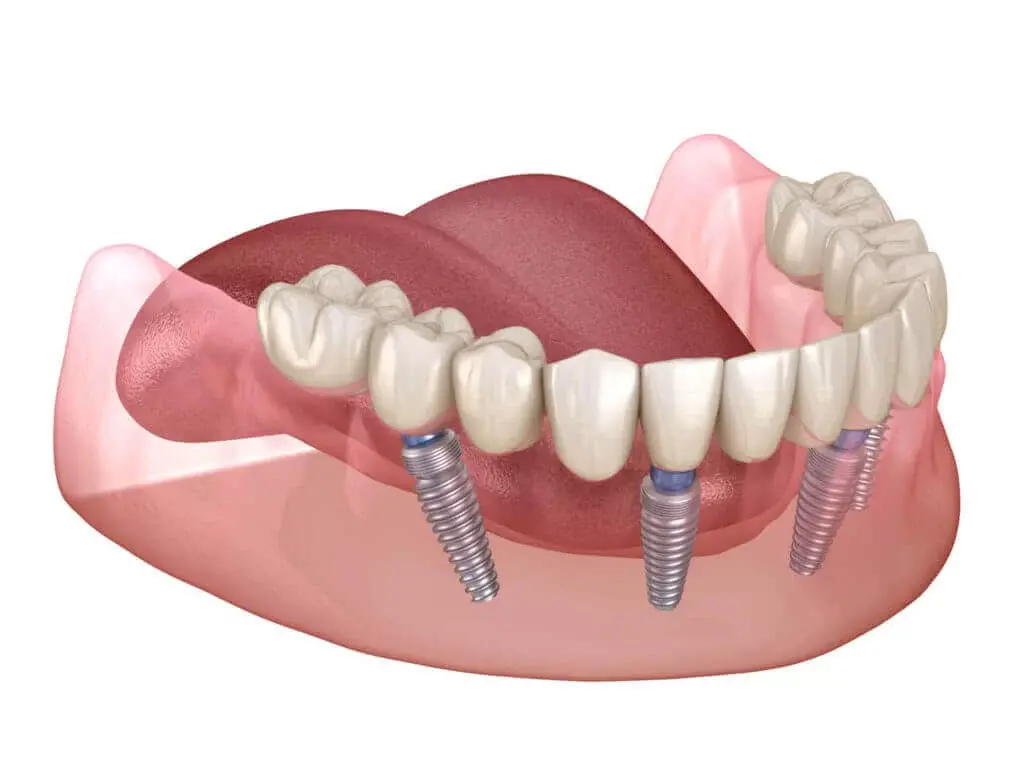
A dental implant is essentially a surgical-grade titanium or zirconia post that is surgically placed into the jawbone. Over several months, the bone fuses to the implant through a process called osseointegration, creating a rock-solid anchor. Once healed, a custom-made crown, bridge, or denture is attached to the top.
While the process is longer and more expensive than other options, the benefits—bone preservation, natural chewing force, and longevity—often make implants the gold standard.
The Anatomy of an Implant
Before discussing the types, it helps to understand the three parts of any implant system:
The Fixture (Post): The screw inserted into the bone.
The Abutment: The connector piece that sits on top of the post, protruding through the gum.
The Prosthesis: The visible tooth (crown, bridge, or denture) attached to the abutment.
Types of Dental Implants
Not all implants are the same. The type you need depends on the amount of healthy jawbone you have and how many teeth you are missing.
1. Endosteal Implants (The Most Common)
What they are: Implants placed directly into the jawbone. They are typically shaped like small screws, cylinders, or plates.
Who they are for: Patients with sufficient healthy jawbone height and width.
Procedure: After a tooth extraction (if needed), the dentist drills a pilot hole and screws the implant into the bone. A healing cap is placed, and the patient waits 3–6 months for osseointegration before attaching the crown.
Best for: Single tooth replacement or multiple adjacent teeth using a bridge.
2. Subperiosteal Implants (The Alternative)
What they are: A metal framework designed to sit on top of the jawbone but just under the gum tissue. As the gum heals, the framework becomes held in place by the soft tissue.
Who they are for: Patients who have insufficient jawbone density or height and who cannot (or will not) undergo a bone grafting procedure. This was historically the solution for people with severe bone loss.
Procedure: The framework is custom-made (often via 3D imaging) and placed under the gums. Posts protruding through the gums hold the replacement teeth.
Note: Subperiosteal implants are far less common today because bone grafting has become very reliable, and endosteal implants have a much higher long-term success rate (over 95%). However, they remain a viable option for specific cases.
3. Zygomatic Implants (For Extreme Bone Loss)
What they are: Extra-long implants (up to 55mm) that anchor not into the jawbone but into the cheekbone (zygoma) .
Who they are for: Patients with severe upper jaw (maxillary) bone loss—often due to long-term denture wear or trauma—who have been told they are "not candidates" for traditional implants.
Procedure: Because the upper jaw lacks bone, the implant bypasses it entirely and anchors into the much denser zygomatic bone. It is a complex, invasive surgery usually performed under general anesthesia by an oral surgeon.
Best for: Full-arch upper restoration (replacing all upper teeth) without the need for sinus lifts or extensive bone grafting.
4. All-on-4 / All-on-X (Full Arch Reconstruction)
What they are: A technique, not a specific implant type. It involves placing four (or six) strategically angled implants in the jaw to support a fixed, full-arch prosthesis (a complete set of teeth).
Who they are for: Patients missing all teeth in one arch (upper or lower) or those with failing dentition who want to avoid individual implants for every tooth.
Procedure: Four implants are placed (the two front implants straight, the two back implants angled at 30–45 degrees to avoid sinus cavities or nerve canals). A temporary fixed bridge is attached the same day ("teeth-in-a-day"). After healing, a permanent zirconia or acrylic bridge is screwed in.
Best for: People transitioning from dentures to fixed teeth with fewer implants and shorter treatment time.
Price Ranges in the United States
Dental implants are an investment. Unlike a filling or a crown, they involve surgery, custom fabrication, and multiple specialists (surgeon + restorative dentist). Insurance often covers little to none of the implant cost (though they may cover the crown portion).
Below are typical total costs per tooth or per arch, including the implant, abutment, and crown, but excluding potential bone grafting or extractions.
Type of Implant | Average Cost (Per Tooth / Per Arch) | Notes |
|---|---|---|
Single Endosteal Implant | $3,000 – $6,000 | Most common. Includes surgery, abutment, and porcelain crown. |
Subperiosteal Implant | $5,000 – $8,000 (per arch) | Rare today. Often requires a specialist lab for the framework. |
Zygomatic Implant | $15,000 – $25,000 (per arch) | Highly complex. Requires an oral surgeon with advanced training. |
All-on-4 (Full Arch) | $15,000 – $30,000 (per arch) | For a complete set of upper or lower teeth. Premium materials (zirconia) cost more. |
Additional Costs You Must Consider
The prices above are for "simple" cases. Most patients need preparatory procedures, which add significant expense:
Tooth Extraction: $200 – $600 per tooth.
Bone Grafting: $500 – $3,000 per site (often required if a tooth has been missing for months or years).
Sinus Lift: $1,500 – $3,000 (required for upper molar implants if the sinus cavity has expanded into the bone).
CT Scan (Cone Beam): $300 – $500 (mandatory for surgical planning).
Realistic Total Cost Example for a single implant:
$3,500 (implant + crown) + $800 (extraction) + $1,200 (bone graft) = $5,500.
Geographic Variations
Low cost of living (Rural South, Midwest): Single implants can be found for $2,500 – $4,000.
Major cities (NYC, LA, Chicago): Expect $5,000 – $8,000 for a single implant from a reputable periodontist or oral surgeon.
Dental Schools: Significantly cheaper (often 50% less), but treatment time is much longer, and procedures are performed by supervised students.
Alternatives to Implants (For Comparison)
Fixed Bridge: $2,000 – $5,000 (for 3 units). Requires shaving down healthy adjacent teeth.
Removable Partial Denture: $1,000 – $2,500. Affordable but can be uncomfortable and unstable.
Traditional Dentures: $1,000 – $3,000 per arch. Least expensive but no bone preservation; they accelerate jawbone resorption.
Is It Worth the Cost?
Dental implants have a success rate of 95% to 98% over 10–20 years, and many last a lifetime with proper hygiene. In contrast, a bridge typically needs replacement every 7–15 years, and dentures every 5–8 years.
From a long-term financial perspective, a single $5,000 implant that lasts 30 years may actually be cheaper than replacing a $3,000 bridge three times over the same period.
The Bottom Line
Dental implants are a significant financial and medical commitment. They require surgery, months of healing, and a high standard of oral hygiene. However, for those who qualify, they offer the closest possible restoration to natural teeth—allowing you to chew, smile, and speak with confidence.
If you are considering implants, seek consultations from at least two professionals: an oral surgeon (to assess bone and surgical risk) and a prosthodontist (to plan the final teeth). And be wary of "cheap implants"—pricing below $2,000 for a complete implant and crown in the US often indicates low-quality components or inexperienced providers.
Disclaimer: This article is for informational purposes only and does not constitute medical advice. Prices are estimates based on US national averages as of 2024–2025 and may vary by provider, insurance coverage, and geographic location.